
UV Digital Printing Technology on Nonwoven Bags

Share Post
Nonwoven bags, primarily made from polypropylene (PP), are constructed using fibers that are bonded together through thermal, chemical, or mechanical processes rather than weaving or knitting. This unique composition allows for a smooth, resilient surface ideal for various printing techniques. Among these, UV digital printing stands out for its ability to produce high-definition, vibrant graphics while maintaining the integrity of the nonwoven material. Unlike traditional screen printing, which often requires multiple stages and limitations in color blending, UV digital printing enables intricate designs, gradients, and photographic- quality images with remarkable precision.
CSJ-G8005C UV Printer Non Woven Bags
The core principle of UV digital printing involves the use of ultraviolet light to cure or dry specially formulated inks directly onto the substrate. The process begins with the design being digitally prepared u sing advanced software that ensures accurate color management and resolution. The nonwoven bag is then positioned within the printer, which employs inkjet heads to deposit UV-sensitive inks onto the surface. Immediately upon contact, the printed ink is exposed to UV light, initiating a photopolymerization process that hardens the ink almost instantaneously. This curing mechanism ensures that the design adheres firmly to the bag’s surface, producing scratch-resistant, smudge-free, and water- resistant graphics that retain their vibrancy over time.
The advantages of UV digital printing extend beyond aesthetics. For manufacturers, the technology offers unparalleled flexibility in production. Designs can be altered or customized without the need for new screens or plates, making short-run and personalized batches economically viable. This flexibility aligns perfectly with current market trends where consumers increasingly demand unique, eco-conscious products. Brands can leverage UV printing to create limited-edition designs, seasonal collections, or promotional items that resonate with their target audience.

From a technical standpoint, the equipment used in UV digital printing for nonwoven bags has evolved significantly. Modern UV flatbed printers are capable of handling a variety of bag sizes, thicknesses, and shapes. These machines are equipped with multi- directional printing heads, high-resolution scanning systems, and precision transport mechanisms that ensure consistent registration across the print area. Some advanced models incorporate white ink channels for printing on darker substrates, while others feature multi-layer printing capabilities that produce embossed or textured effects directly on the bag surface. Such technological advancements have broadened the scope of design possibilities, allowing nonwoven bags to carry branding, artistic motifs, or even intricate photographic imagery with remarkable fidelity.
The process of preparing nonwoven bags for UV printing involves several crucial steps. Initially, the bags are inspected to ensure uniformity in thickness and surface texture, as inconsistencies can affect ink adhesion. Pre- treatment methods, such as corona treatment or plasma exposure, are sometimes applied to increase the surface energy of the polypropylene fibers. This step enhances the wettability of the ink, ensuring sharper lines and improved color density. After printing, some manufacturers apply a protective coating to further enhance durability and provide resistance against abrasion or UV exposure. While optional, these post- printing processes contribute to the premium quality of the final product, extending its lifespan and maintaining visual appeal even under frequent use. A practical understanding of the economics of UV digital printing on nonwoven bags highlights its transformative
potential. Traditional printing methods, like flexography or screen printing, often involve high initial setup costs and are less adaptable to intricate or multicolor designs. UV digital printing, in contrast, minimizes material wastage and setup time, making it ideal for both mass production and smaller batches tailored to consumer preferences. Moreover, the ability to produce full- color designs in a single pass reduces labor costs and shortens production cycles. The integration of UV printing into nonwoven bag manufacturing not only elevates product aesthetics but also improves operational efficiency, ultimately delivering a competitive advantage to manufacturer The environmental implications of UV printing on nonwoven bags also deserve attention. Nonwoven bags are already lauded for their eco-friendliness, being reusable and capable of replacing single-use plastics. By adopting UV digital printing, manufacturers further reduce chemical usage compared to solvent-based inks, as UV inks are typically free from volatile organic compounds (VOCs). This aligns with global sustainability initiatives, where both producers and consumers seek greener alternatives without compromising on visual appeal. Consequently, UV digital printing does not merely enhance the bag’s look it reinforces its identity as a responsible, environmentally conscious product. To provide a clearer perspective, the following table illustrates a comparative overview of UV digital printing versus traditional printing methods for nonwoven bags:
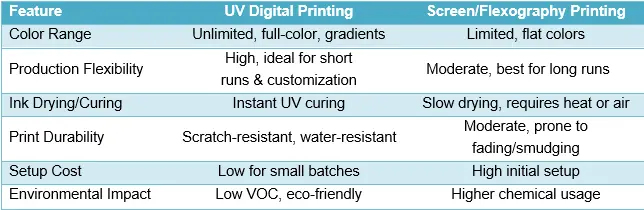
Another significant aspect of UV digital printing is its capacity to maintain consistent quality across diverse bag sizes and surfaces. Nonwoven bags often vary in thickness, color, and texture depending on the manufacturer and intended use. UV printers accommodate these variations by adjusting ink droplet size, curing intensity, and print head speed, ensuring uniformity in the final output. This adaptability is particularly valuable for brands that seek a cohesive visual identity across different product lines, whether they are promotional tote bags, grocery carriers, or fashion accessories.
 Advancements in machinery have played a pivotal role in popularizing UV printing on nonwoven bags. Leading- edge flatbed UV printers feature automated bag feeding systems, multi-axis printing heads, and integrated quality control sensors. These innovations allow for high-speed production without sacrificing accuracy or design complexity. Some machines also offer hybrid capabilities, combining UV printing with other finishing processes like embossing, foiling, or varnishing in a single workflow. By consolidating multiple finishing steps, manufacturers can achieve high-end aesthetics, reduce production costs, and streamline operations.
The consumer perspective is equally important when assessing the impact of UV digital printing. The contemporary buyer values personalisation and quality, with design often influencing purchase decisions as much as functionality. Nonwoven bags printed with UV technology meet these expectations by offering vivid colors, intricate patterns, and tactile finishes that appeal to a diverse audience. Brands can effectively communicate their ethos, logos, or campaigns through high-resolution graphics that remain durable and visually striking over repeated use. This enhances brand recognition while also reinforcing the bag’s utility as a sustainable alternative to single-use plastics.
A theoretical understanding of UV inks highlights the science behind their effectiveness. UV inks contain photoinitiators that react when exposed to specific wavelengths of ultraviolet light. This reaction triggers polymerization, transforming the liquid ink into a solid, durable layer instantly. Unlike solvent-based inks that rely on evaporation to dry, UV inks do not penetrate deeply into the nonwoven fibers but form a uniform surface coating. This results in sharp, vibrant designs that resist cracking, peeling, or fading. Additionally, modern formulations include flexible resins that accommodate the slight stretch and flex of polypropylene Fibers without compromising the integrity of the print.
The following table provides an overview of typical UV printing parameters and their impact on nonwoven bags:
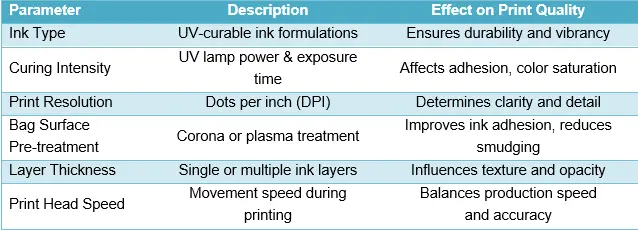
As the global market for sustainable packaging expands, the role of UV digital printing in nonwoven bag production continues to grow. Manufacturers are increasingly investing in automated, high-resolution UV printers that support fast turnaround times and intricate designs. Simultaneously, research into novel UV ink formulations and pre-treatment methods promises to enhance further the quality, durability, and environmental compatibility of printed nonwoven bags.
From fashion brands seeking stylish, reusable carriers to retailers promoting eco- conscious shopping habits, UV digital printing provides a bridge between functionality , aesthetics, and sustainability. The technological evolution is also complemented by growing consumer awareness. With environmental concerns gaining traction, buyers increasingly prefer bags that are both durable and visually appealing. UV digital printing caters perfectly to this trend, offering a versatile solution that combines creativity with practicality. Companies can now experiment with seasonal designs, limited editions, or thematic collections without significant investment, while consumers enjoy high-quality products that align with their values.
From a theoretical perspective, UV digital printing represents a synthesis of chemistry, engineering, and design. The interplay between photopolymerization chemistry, precision mechanical engineering of printers, and digital graphic workflows enables a level of customization and quality that traditional methods cannot match. As the technology matures, we can anticipate further innovations, such as faster curing systems, multi-material printing, and even smart inks capable of responsive color changes or interactive features, which could redefine the very concept of nonwoven bag design.
UV digital printing on nonwoven bags has transformed the landscape of sustainable packaging. By offering high-resolution graphics, durable finishes, and eco-friendly production, it has elevated a simple utility item into a platform for artistic expression, brand communication, and consumer engagement. The synergy of technological precision, chemical innovation, and design flexibility ensures that nonwoven bags are not only functional and sustainable but also visually captivating, meeting the expectations of modern consumers and manufacturers alike. As industries continue to embrace sustainability without compromising creativity, UV digital printing stands as a testament to the possibilities that emerge when technology meets conscious design.
The future of nonwoven bag printing is bright, with UV digital printing at the forefront. Its ability to combine speed, quality, customization, and environmental responsibility ensures that these bags will continue to evolve as both a practical necessity and a canvas for creative expression. Brands, manufacturers, and consumers all stand to benefit from this convergence of technology, art, and sustainability, making UV digital printing an essential tool in the ongoing journey toward a more responsible and aesthetically enriched world of packaging.
12:50 PM, Feb 12
.webp)
.webp)




1.jpg)
1.jpg)


