
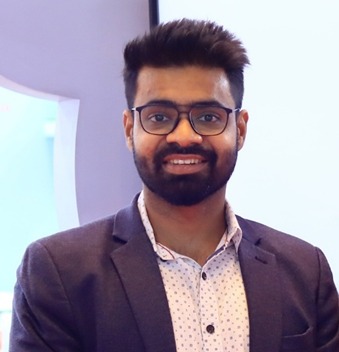
Mr. Mayank Beria, Co-Founder of Family care Consumer Pvt Ltd and CEO of Millennium Baby Care
Share Post
Mayank Beria is the cofounder of Familycare Consumer Pvt Ltd and CEO of Millennium Babycares Ltd. He has done his BBA from NMIMS and MBA in International Business from Leeds University, UK. After completing his Masters, he came back to India and joined his father’s business of textiles Processing. Soon after, he diversified into manufacturing and marketing of Baby pull up diapers and sanitary napkins. He built this business from scratch and today he has a successful brand of diapers baby products in over 15 states of India and is still growing everyday..
TBD: What drives your company's growth and innovation?
ANS: Our company's business model is built on a dual-pronged approach, harnessing the strengths of two distinct organizations: Familycare Consumer Pvt Ltd and Millenium Babycares Ltd. Familycare is the incubator for our in-house brands namely Bumtum, Elduro, and Free Me, which are loved by our customers. Meanwhile, Millenium operates as a trusted OEM partner, crafting high-quality products for esteemed client brands like Himalaya, Patanjali, Dabur, Fisher Price, Amazon, Piramal, Mee Mee, etc spanning across baby diapers, adult diapers, and sanitary napkins. This synergy enables us to innovate, adapt, and thrive in the dynamic market landscape.
TBD: How do you navigate the intersection of innovation and partnership, ensuring that your proprietary R&D and product development don't conflict with your OEM collaborations?
ANS: No company can thrive solely on private labelling or only contract manufacturing in India's competitive landscape. Even industry leaders have diversified their portfolio with own baby and adult diaper brands. Similarly, we've adopted a hybrid approach, leveraging our brands like Bumtum to test innovative products, gauge customer response, and refine our offerings. By maintaining control over our brands, we can conduct rigorous trials, gather valuable insights, and confidently offer proven products to our OEM partners. This strategic synergy allows us to drive innovation, foster partnerships, and stay ahead in the market.
TBD: What's your perspective on the availability and quality of raw materials in India, especially when compared to global standards?
ANS: The reality is that our industry relies heavily on imported raw materials, with over 60% of our needs met by overseas suppliers. Wood pulp or fluff, a crucial component, is predominantly manufactured in the US, with most brands relying on American imports. Similarly, Super Absorbent Polymer (SAP), another vital material, is not produced in India, forcing us to turn to countries like China, South Korea, Japan, Malaysia, etc. for supply. Unfortunately, there's no immediate prospect of domestic SAP production.
However, the non-woven fabric landscape has transformed post-Covid, with significantly improved availability in India. Yet, there's still room for enhancement in terms of price competitiveness compared to global benchmarks. While glue and hot melt adhesive manufacturing has localized, their imported raw materials necessitate further cost optimization. Encouragingly, materials like spandex, PE film, and packaging components have achieved localized manufacturing, ensuring domestic availability.
TBD: What are the key obstacles hindering the domestic manufacturing of these products in India, based on your expertise?
ANS: In my experience, the primary challenges lie in the significant capital expenditure required to establish these plants, the specialized skillset needed to operate them efficiently, and the substantial scale necessary to ensure profitable operations. Although the growth of the hygiene industry is propelling us in the right direction, we still have a long way to go in terms of achieving the requisite scale and demand to make domestic manufacturing a truly viable and sustainable proposition.
TBD: What type of fabric do you utilize in your products - ADL or bubble products? Do you believe ADL enhances the distribution properties of baby diapers and sanitary pads?
ANS: We opt for ADL fabric, readily available in India with impressive quality. As its name suggests, the Acquisition Distribution Layer (ADL) plays a pivotal role in elevating product performance. By incorporating ADL, we leverage its unique properties to optimize fluid distribution, ensuring enhanced comfort and protection in our baby diapers and sanitary pads.
TBD: In the realm of fluid distribution, some manufacturers employ mechanical channels, while others swear by ADL. Which approach do you believe reigns supreme - the precision of mechanical channels or the versatility of ADL?
ANS: The answer lies in harmony, not hierarchy. It's a matter of product positioning and personal preference. Some brands opt for mechanical channels like slit cores, while others prefer ADL. We, however, believe in synergy, combining both techniques to achieve the perfect balance. By marrying mechanical precision with ADL's adaptability, we can meet the stringent regulations and craft products that exceed consumer expectations. Ultimately, the secret to superior distribution lies in finding the ideal blend of both worlds.
TBD: Is your plant equipped with a comprehensive R&D facility, spanning both raw material development and final product innovation?
ANS: We pride ourselves on possessing cutting-edge facilities that rival those of multinational corporations. As a trusted partner to esteemed global brands like Mother Care, Amazon, Flipkart, Walmart, and more, we've cultivated capabilities that meet the highest standards. Our R&D prowess enables us to innovate and refine both raw materials and finished products, ensuring we stay ahead of the curve and deliver exceptional quality to our discerning clients.
TBD: Are your products transcending borders, reaching customers beyond India's shores?
ANS: Yes, we've begun to make our mark globally, with a modest yet growing presence in Africa and the Middle East. Although our export quantum is still limited, we're actively nurturing this aspect of our business, envisioning a future where our products bring comfort and joy to customers worldwide. As we gradually expand our international footprint, we're excited to share our brand's promise with a broader audience.
TBD: What's the sales landscape like for your brand across its three flagship products: baby diapers, adult diapers, and sanitary pads?
ANS: Our crown jewel is undoubtedly baby diapers, commanding a dominant 85% of our sales. This hero product is the cornerstone of our brand, with the remaining 15% shared between adult diapers and sanitary pads. While we maintain a presence in the adult diaper market, our focus is more nuanced. Sanitary pads, though a vital offering, currently occupy a smaller slice of our portfolio, as we concentrate on nurturing our core strengths.
TBD: How does your brand's sales performance unfold across the urban-rural landscape?
ANS: While our online dominance, accounting for 80% of sales, blurs the lines between urban and rural markets, we can glean some insights from e-commerce channels. Roughly, 60% of our online sales emanate from rural areas, with 40% from urban centers. Meanwhile, our offline presence, comprising 20% of sales, skews more rural. Overall, we're witnessing a harmonious balance, with 50% of our sales rooted in rural markets and 50% in urban, with baby diapers exhibiting a slight bias towards rural penetration. This equilibrium underscores our brand's ability to resonate with customers across diverse geographies.
TBD: Are there discernible differences between products sourced by the government for free distribution and those available in the market?
ANS: Indeed, a vast difference exists. Our decision to discontinue government collaborations stemmed solely from this concern because it requires a very stringent price point. Products procured and distributed by the government often compromise on quality, resorting to subpar raw materials that barely meet minimal standards.
TBD: Does this quality concern influence your focus on sanitary pads?
ANS: Yes, it's a significant factor. Sanitary pads are an intensely personal and habitual product, making it challenging to persuade women to switch from familiar, generational choices. Changing consumer behaviour demands substantial investment and time. Even Unicharm's Sofy, a quality product, took 15 years to secure a small market share, despite competing in a landscape dominated by established MNC brands like Whisper and Stayfree. The sanitary pad market is notoriously difficult to penetrate, making it a daunting task for new brands to gain traction.
TBD: What's the roadmap for scaling up your exports?
ANS: Until now, our capacity constraints have limited us to meeting domestic demands, but the tide is about to turn. Our new plant, set to commence operations by September, will empower us to satiate India's needs and simultaneously explore the vast expanse of export opportunities. As we unlock this new capacity, exports will emerge as a vital growth driver for us in the forthcoming financial year, beckoning a fresh era of expansion and exploration.
TBD: How are you engaging with rural and semi-rural markets through events, and what impact are these initiatives having?
ANS: We're cultivating connections in these communities through two primary event strategies. Firstly, we participate in vibrant fairs, particularly in Northern India, where our stalls showcase our comprehensive product range, including baby diapers, wet wipes, sanitary napkins, and an array of baby care essentials like shampoos, lotions, and massage oils. These events serve as a powerful platform for awareness and education, introducing our brand to new audiences. As visibility grows, customers can seamlessly transition to purchasing our products from local retail stores.
Secondly, we're extending our reach through thoughtful initiatives, such as distributing adult diapers in old age homes and baby wipes and diapers in orphanages. These efforts not only foster brand visibility but also demonstrate our commitment to giving back to the community. Our recently launched range of baby toys and accessories under the bumtum brand further solidifies our connection with these markets. Through these events, we're sowing seeds of trust and nurturing a loyal customer base in rural and semi-rural India.
TBD: Are exhibitions a vital conduit for expanding your OEM business's client base?
ANS: We've opted out of exhibitions for two compelling reasons. Firstly, our current capacity constraints limit our ability to take on new clients, and secondly, the pool of potential clients is relatively small, with most already within our network. However, with our new plant being operational soon, we intend to start participating in these exhibitions to increase our customer interactions.
05:24 PM, Aug 16
Other Related Topics
.webp)
.webp)




1.jpg)